The 60-Day Clock Nobody Mentions at a Middle Valley Lake Closing
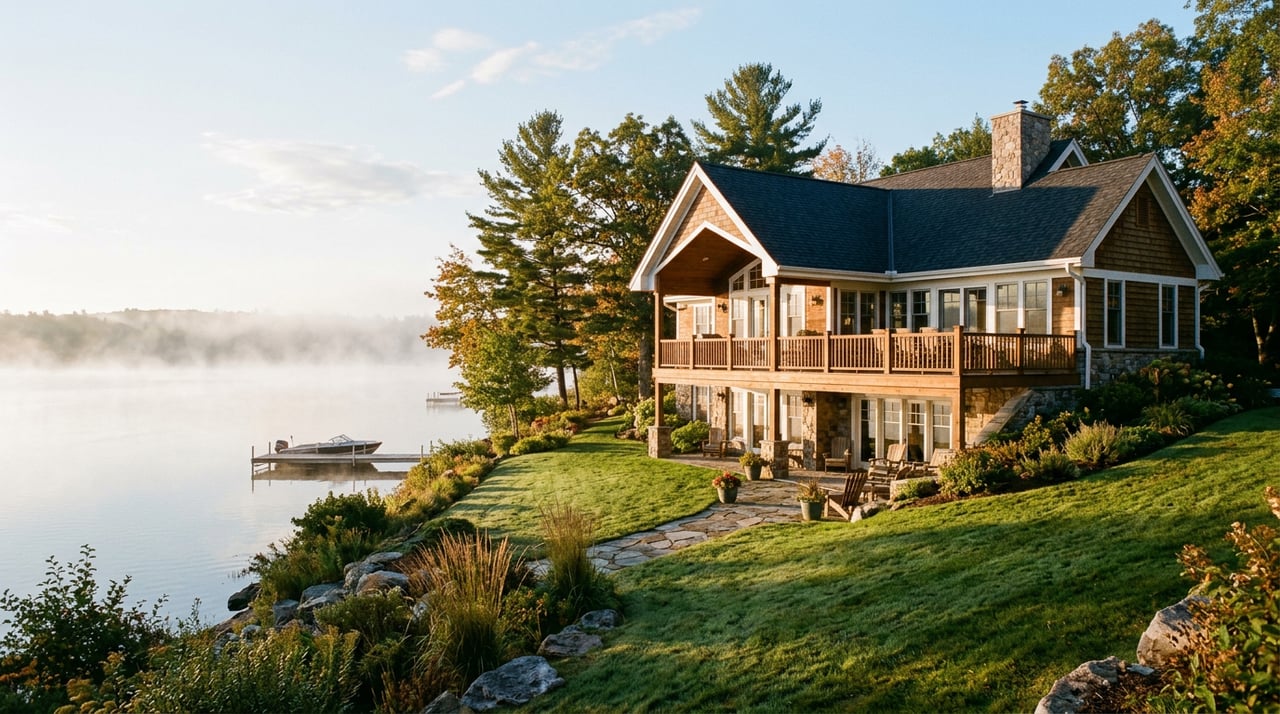
Middle Valley's water frontage carries a real premium. Homes on Chickamauga Lake are commanding something in the neighborhood of $300 a square foot in current listings, against roughly $200 a square foot just a few streets inland. That gap is wide enough that most buyers assume they know what they're paying for: the view, the private shoreline, the boat sitting at a dock that comes with the house.
Here's what that assumption misses. The dock does not come with the house. Not automatically, and not on the timeline most buyers expect.
Chickamauga Lake's shoreline is managed by the Tennessee Valley Authority, and TVA's own guidance for buyers and sellers is direct about how ownership works: permits do not automatically transfer with property ownership. A dock that has sat in the water for twenty years, fully legal, fully maintained, still requires the new owner to apply for a fresh permit within 60 days of closing. Skip that step, and the thing driving a third of your purchase price is sitting there without a name on it.
Middle Valley sits along roughly 11 square miles between Hixson and Soddy-Daisy, with Chickamauga Lake forming its eastern edge. The lake itself is not natural. TVA closed the gates on the Chickamauga Dam on January 15, 1940, and the water that rose afterward turned a farming community into lakefront property overnight. Everything about how this shoreline works today traces back to that one federal project, including who controls what gets built on it.
Redfin's most recent tracking window this summer put the average Middle Valley house price at $340,000, up 6.9% from the year before. That number by itself tells a buyer almost nothing about what they're getting for it, because a $340,000 inland home and a $340,000 lakefront home are not competing for the same square footage. At the current per-square-foot spread, roughly 300 dollars on the water against roughly 200 off it, the water access itself is doing a large share of the pricing work. Which means the legal status of that water access, the dock, the boat lift, the seawall, matters more here than it does almost anywhere else in the neighborhoods Ricky covers.
TVA regulates shoreline construction under Section 26a of its founding act, and the agency treats every dock permit as tied to a person, not a parcel. That distinction is the whole issue. A house sale transfers title. It does not transfer the federal authorization for the structure sitting on the water in front of it.
Here is how the two most common situations actually play out:
| Situation | Fee | What triggers it | Typical review window |
|---|---|---|---|
| New dock construction | $500 | Building a new dock, boathouse, or lift where none existed | Up to 100 days for a complete application |
| Existing dock, change of ownership | $250 | Any sale of a property with a permitted dock already in place | Same review process, plus time to confirm the dock matches its original permit |
Docks built before November 1, 1999, when TVA's Shoreline Management Policy took effect, are often described as grandfathered. That word does a lot of work it shouldn't. Grandfathered means the design itself is allowed to stay as built. It does not mean the permit skips reapplication at the next sale. TVA's own FAQ is specific on this point: any time property ownership changes, the new owner has to request a new Section 26a permit for the existing facility, even one that predates the current policy by two decades.
Review can also run longer than the standard window. TVA notes that incomplete applications, unresolved encroachments, or a project that overlaps with a required state permit can push the timeline out further, sometimes toward 120 days. If the dock needs any shoreline work beyond a straight transfer, riprap, a seawall, dredging below the ordinary high water line, Tennessee's environmental agency may require a separate Aquatic Resource Alteration Permit on top of the TVA process.
"Permits do not automatically transfer with property ownership."
That's TVA's own language, and it's worth sitting with, because it's the single fact that changes how a Middle Valley lakefront closing should be handled compared to a closing three streets back from the water.
County zoning has no authority to override TVA on shoreline matters. A dock can be perfectly compliant with every local building code and still be operating outside its federal permit, and Hamilton County's rules simply don't reach that far. The two most common ways this surfaces in a real transaction:
There's also a seasonal wrinkle worth knowing before a showing. Chickamauga Lake runs a winter drawdown of roughly five to eight feet, so a dock and shoreline that look one way on a July walkthrough can look meaningfully different in January. That's not a permitting issue, it's a practical one, but it shapes how a buyer should read a listing photo taken at a different time of year.
If you're evaluating a specific waterfront address in Middle Valley, the due diligence list is short but non-negotiable:
The flip side matters just as much. A seller who assembles the permit file, the as-built drawings, and proof that the dock matches its original approval before listing removes the single biggest source of friction a buyer's agent will raise. If there's a known gap between what was built and what was permitted, disclosing it early and outlining a path to compliance is far better than having it surface during an inspection period with a closing date already on the calendar.
None of this means Middle Valley waterfront is a harder place to buy or sell than it should be. Chester Frost Park's 230 acres, deeded to Hamilton County by TVA back in 1959, are proof that this stretch of shoreline has always run on a federal framework layered underneath local life. The lake that makes Middle Valley worth a premium is the same lake that comes with its own paperwork. Knowing which is which before you're at the closing table is the difference between a smooth transfer and a permit application that outlives your moving truck.
Does every home in Middle Valley touch TVA-managed shoreline? No. Only properties along the Chickamauga Lake side of the community, generally the eastern edge, are affected by Section 26a rules. Homes elsewhere in Middle Valley are not subject to TVA shoreline permitting.
What happens if a dock was never permitted at all? It has to be disclosed, and the path forward runs through TVA directly. Unpermitted structures can require retroactive permitting or removal, and either outcome takes time buyers and sellers should account for in a contract rather than discover after signing.
Is the winter drawdown something to worry about? It's a seasonal fact of life on Chickamauga Lake, not a defect. Docks are engineered to handle it. It's simply worth knowing that a lake viewed in January will not look identical to the same lake in July.
If you're weighing a specific waterfront property in Middle Valley, or trying to figure out what a listing's dock situation actually means for your timeline, Ricky Streeter has walked this shoreline enough times to know which questions to ask before you're under contract. Let's Connect.





Whether you're buying, selling, or investing, I’m here to guide you every step of the way. Contact me today!
Get In Touch With Our Team To Learn More